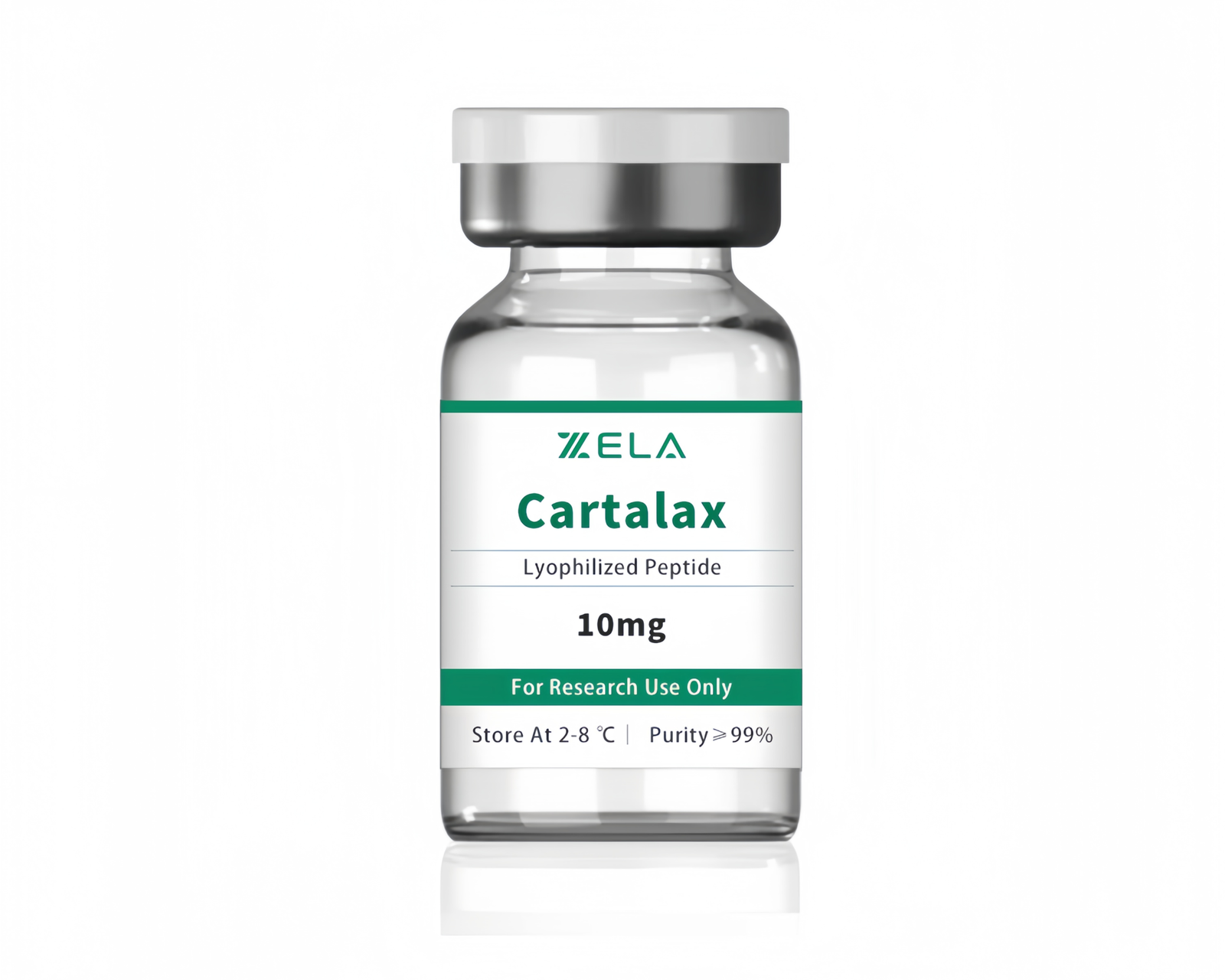
Cartalax (Ala‑Glu‑Asp) is classified among the Khavinson bioregulatory peptides – ultrashort peptides that may interact with DNA and modulate gene expression at nanomolar concentrations[1][4]. The peptide sequence corresponds to a motif found in the alpha‑1 chain of type XI collagen, a structural protein important for cartilage integrity[5]. In preclinical fibroblast and chondrocyte culture models, Cartalax has been reported to upregulate Ki‑67 (a proliferation marker), increase SIRT‑1/SIRT‑6 expression, reduce p53 and caspase‑3 activity (pro‑apoptotic signals), and inhibit MMP‑9 synthesis (an enzyme linked to extracellular matrix degradation)[2][3][6].
Observations from preclinical literature.
- May support fibroblast proliferation and reduce markers of cellular senescence in aged cell cultures[2][3].
- Preclinical data suggest modulation of extracellular matrix homeostasis via MMP‑9 inhibition and collagen‑related gene expression[6].
- General tolerability: Khavinson bioregulator peptides have been described as well tolerated in observational settings; occasional mild injection‑site reactions (redness, itch) may occur with subcutaneous administration[1].
- Limitations: No large‑scale human RCTs; most data derive from in vitro or rodent models.

 BRL R$


Reviews
There are no reviews yet.